Thursday, November 10, 2011

Imagine The Abundance - Urban Gardens

Imagine, you're perusing the Sunday paper, thumbing through various articles, world news, sports, opinion pieces... yea, we've all been there. What feelings arise for you as the images pass by your eyes? Article after article, world news and local... everything seems so dismal.

In disgust and with a freshly drained world view, you fold the paper up and drop it back down on the table. Just before you look away and try to forget the morning sorrow, a small advertisement catches your eye.

FREE GARDEN
DESIGN & INSTALL

Free garden? Sounds too good to be true. But it's about the only positive thing you've seen this morning. What have you got to lose?

What you don't know is that, behind the scenes, there are 20 knowledge hungry permaculture students waiting to get out of the classroom and get their hands dirty in your very own backyard!

Enter The Permaculture Research Institute's, Nick Huggins, and his class of Urban Design & Consultancy Students.

With help from Nick, you've sourced all the materials, made sure you've stayed within your budget (yea, well... you do have to provide something. A small materials cost will be well worth the expense after that first time you bypass the produce section in the supermarket), and now, there's a mountain of compost next to Gravel Summit and The Great Wall of Strawbale all ready to somehow be transformed into your new backyard garden. Oh yea... and that pesky depressing paper? It's there too... along with many more like it, waiting to meet what you hope will be their final resting place.

With great anticipation, you try to envision how those pieces might all fit together. You imagine watching steaming piles of compost being shoveled atop some pathetic politicians face. "That'll do 'em right," you mutter out loud with a sinister grin.

The Business of Permaculture

Nick brings an interesting approach to teaching permaculture. One that, I personally believe, is not taught or even talked about enough in permaculture circles. Nick uses his time in the classroom to show students the viability of permaculture as a model for ethical AND profitable business.

Profit. The word itself can drag up some of the same feelings and emotion as those grim sunday headlines. In fact, some might say that many of those headlines are the result of our profit driven society. In permaculture however, we take every opportunity to see how a problem can be turned into a solution... how wastes of one system become resource for the next.

Profit, itself, is not inherently evil anymore than a hammer is a weapon. Like any other tool, it's all in how we use it. The ethics of permaculture (earth care, people care, share of surplus) not only provides some direction to how we might use profit for good... it directs us clearly to share it for the good of the people and the planet. Imagine if all the world's financial transactions were guided by these ethics?

Sharing the surplus of his successes in permaculture business has allowed Nick to grow permaculture's reach into new demographics that would otherwise go unserved. Our clients, the Finlayson's, are the latest beneficiaries of that surplus.

The Garden of Your Future


It's Wednesday morning, a light rain just thinned out as a bus full of permies pulls in to the drive. You can hardly contain your excitement as this international team of permaculture interns greets you.

After a quick brief, the team gets to work marking out the design with a can of blue paint as you try to envision the plants draping over the edges of thin blue lines, heavy with produce.

As images of your future garden flash before your eyes the reality is manifesting in front of you... you stare intently, trying not to blink fearing you might miss the amazingness of it all unfold.


Over the course of next three days you watch as the cycles of abundance are set into motion in your very own back yard. There's no stopping it now. An engine has been started under your soils, and in your heart. What a gift!


(Special thanks to Mark Finlayson and family for the wonderful hospitality and time lapse photography and all the students, interns and teachers of the PRI who made this such an amazingly inspirational experience.)

Tuesday, November 1, 2011

Interning on Zaytuna Farm

Over the past three plus weeks myself and 15 other cohorts have been fully engaged in farm life. And, although there are several aspects of this lifestyle that you might expect out of a typical farm experience (i.e. milking goats, turning compost, planting veggies, etc...) this is far from a typical farm!

Zaytuna Farm stands apart from other farms in many ways... not the least of which being that it is the home of the Permaculture Research Institute of Australia. The staff at Zaytuna are growing more than just healthy veggies, they're turning out crop after crop of new permaculture professionals.

This year my cohorts and I are lucky enough to count ourselves among the yield! Over the course of 10 weeks we not only engage ourselves in what it takes to run a permaculture farm, we also learn valuable skills such as the ins-and-outs of permaculture earthworks, how to run a permaculture landscape and consultancy business, the finer points of soil biology, permaculture teacher training and how to engage in international permaculture aid work. And, as if that weren't enough, all the while we're caring for livestock, pruning trees, harvesting food for our daily meals... the list goes on and on.

After the first week of introductions and orientation to the farm we got right into the heavy lifting... earth lifting that is. Well, earth moving might be the more accurate term.

In the Permaculture Earthworks Course, we learned about various types of earthworks systems such as dams and swales and how they would be implemented in a landscape. Then we got hands on and tested our surveying skills as we scoped out a location for a new dam (number 15?) on the farm.

Surveying, we learned quickly, is a very important skill in regard to testing our assumptions and finding a suitable site for a new dam or swale. The eye plays quite a few tricks on us and, at one point it took two groups of us swapping places on two separate ridges and looking across at each other from a different perspective before we realized that it wasn't the equipment that was failing us, but our very own eyes.

After a bit of toying around and pegging out different hypothetical dam sites, it was time to get serious. The excavator was on the ground, ready to roll, and it was our job to direct him. Fortunately for us, Glen, our machine operator, was a very experienced earthmover that had put in many of the dams here at Zaytuna previous to this one in courses just like ours. He knew what he was doing, even if we didn't. He also new how to explain what he was doing and share some of the insights of his over 20 years in the business... so long as you can sift through a deep Ausie accent to discover the gems of knowledge he doled out. 

Glen pointed out many of the things we should know to keep an eye out for when going into a job and what to do should you encounter certain situations. We were very fortunate, in a rather strange way, that our dam building exercise was actually wrought with problems. Fortunate in that we had the expertise of both our highly experienced earthmover, Glen, and our highly experience course instructor, Geoff, to lean on. With their combined experience, all the issues we encountered as we excavated our lovely new dam created nothing more than a valuable learning experience... and a perfectly suitable, albeit odd looking, new dam. Check out the video of our project here.

With dams, swales, some pipe crossings, and a couple new camper sites carved out our earthworks adventure came to a close... but our internship had only just begun!

This week, our motley crew of Permaculture Interns (ranging from the Pennsylvania to Perth, Germany to the Caribbean Islands and about everywhere else in between) are taking on Urban Design and Consultancy with previous intern graduate, Nick Huggins. Another great adventure is just ahead as we prepare to install a permaculture garden for a real live suburban client in the neighboring city of Lismore. For the clients sake... let's hope we don't encounter quite as many "learning experiences" as we did during the earthwork's course!

Saturday, October 15, 2011

The Growing Abundance of Moloka`i

Several, all but empty, gift shops line the main drag here in the small town of Kaunakakai, Moloka`i. Two meager grocers dominate the square's activity. On the edge of town, which is really only about a block wide, there sits a quant old natural food store that reminds me of more than one ol' town co-op on the mainland.

A doddering old codger directs me around the store and points out all the things grown on the island without every having to leave his seat behind the counter.

"This is the stuff Robin brought by yesterday" he explains to another customer, pointing to a box of produce just over the counter from where he sat.

Robin, that's who I'm supposed to meet up with later. She's coming into town to meet me discuss possible camping accommodations. What are the chances this store clerk is talking about the same Robin you ask? Well, on Moloka`i, as I would soon find out, the chances are pretty darn good.

The overhead view

Touching down at the small airport I started to question my motives for coming to this island. Was I really going to find the answers to all the questions I had or was this going to be an adventure in lost time?

The island wasn't really much to look at from above. Roads and fences partitioned open agricultural plots and pastures. The earth, exposed and denuded, seemed to imbue every visible car and building with it's ruddy pigment. This depressing sight did not give promise to what I hoped to find here.

I was picked up at the airport by Emillia Noordoek, Sust `aina ble Moloka`i's Executive Director. According to their mission statement, Sust `aina ble Moloka`i works to "restore the island's legacy of "aina momona" (abundant land) creating a sustainable future that integrates traditional knowledge and cultural pathways with compatible, modern sustainable strategies".

As we drifted through the lonely street from the airport toward town I engaged Emillia in questions regarding the island's history and what led to the current state of malady I observed from above.

"Like everywhere else, people got on the train of 'modern agriculture'" she explains, "high input, intensive monocultures that wreck the land ...now we're just trying to find our way back."

Emillia explained the current projects they're working on such as trying to revive the schools struggling agriculture program and build curriculums that teach elementary students the fundamentals of sustainability. She also tells me of how they are contending with other issues such as the need for worthwhile employment.

"We are going up against one of the island's largest employer, Monsanto."

As it turns out, much of the land on Moloka`i that had previously been used for pineapple production is now being leased to Monsanto (some 1,650 acres) for a 99 year term. It should come as no surprise that the most isolated islands in the world are a prime target for genetic experimentation.

Island solidarity

When we arrived in town Emillia dropped me by Kalele Bookstore where I was welcomed by Teri Waros. Teri, an inviting and friendly woman with an unabating smile, welcomed me in and offered me a liliko`i (a fruit I was quickly becoming addicted to during my time on the islands) as she helped me to make arrangements for my evenings stay.

"I'll call Robin and see if they will be swinging into town today," she volunteered. "Why don't you set your bags down out back and explore the town a bit. There's a natural foods store across the street in case you need anything."

As it turned out, Robin was on her way into town and offered to take me back to the farm after she finished her errands. In the mean time, Teri was setting up for a movie viewing that would prove to  completely alter my understanding of island life.

Gathering in the Kalele Bookstore, the community of Moloka`i had come out to hear story of their sister island peoples to the North. The Unangan peoples, much like the native people of Hawai`i, lived an isolated island life for many years sustaining off the abundance of their islands and the vast Pacific Ocean.

The ongoing plights of these two island cultures, although differing in many ways, is painfully linked. Generations worth of exploitation, slavery, cultural suppression and even genocide still haunt them.

During the course of the film, and subsequent discussion, I found myself in awe of the strength and resilience of these two island cultures. Through so much adversity, they still find a way to persevere and work to revive the way of life that their ancestors knew. 

Restoring aina momona

No one seems to exemplify this more fluently than Malia Akutagawa. Malia, a marie biologist and environmental lawyer, and her work with the Permaculture Research Institute, was my main motivation for detouring to this obscure island. Already, before even having the opportunity to spend much time with her, I was discovering that the island had much more in store for me than I ever could have expected.

After an inspiring evening at Kalele Bookstore, I awoke in the trees surrounded by a forest of food. Out of the screened windows of my one room bungalow there hung a profound cornucopia of fruit. Mango, avocado, starfruit, papaya, acerola, to name just a few that could be seen from that vantage.

I had awoken on Robin and Dano Gorsich's Permafarm located in a remote hideaway on the East end of Moloka`i. This amazing site was a small example of the vast potential the island held for food production. On 9/10ths of an acre, Robin and Dano supported themselves and managed to raise and put their four daughters through college.

The Permafarm is special in many ways... most notably in its location. Being in the Waialua Valley on the windward side of the island, the Permafarm is nestled in the heart of Moloka`i's rainforest with a still unsullied stream. But over 2/3rds of the island are desert and that desert has been growing.

President and founder of Sust`aina`ble Moloka`i, Malia Akutagawa has worked on a huge variety projects to reverse the desertification of her island including a permaculture initiative designed to create a network of local teachers to mentor youth and manage large earth repair projects.

I met up with Malia later that morning and she told me more about her current goal to initiate an ahupua`a restoration project. Extending from mauka (the mountain) to makai (the ocean), this restoration project would serve as an example of responsible land management for all of Hawaii and, as my experience the previous night had shown, be an inspiration far beyond any single chain of islands.

Malia drove me around the island and showed me several sites that her community has been working on including several fishponds and the location of the earthworks course put on by Geoff Lawton in December of 2010.

As we explored these various sites around the island Malia explained to me how the picture of health and sustainability on Moloka`i has been skewed. Much of the statistics used to describe things like employment rates and poverty rates fails to account for the people who are still subsisting off the abundance of their natural environment.

In a subsistence study in 1993, Malia helped to co-ordinate the collection of data that found a significant amount (38%) of all the native peoples diet on the island was provided by subsistence activities such as fishing, hunting and foraging. This clearly illustrates the importance of the aina in the native hawaiian way of life.

Bits and pieces


All together I had a very inspiring few days on Moloka`i. What I've been able to write about here is only a small glimpse at the beautiful impression this island and her people have left on me. It's not everyday that I have the opportunity to explore a world so foreign and yet so close to my heart!

I wish the people of Moloka`i well in their struggles to maintain the sacred wonders that have been bestowed upon their small island. One day I hope to return to the island and contribute the restoration of  momona!

A deep mahalo to Malia Akutagawa, Robin and Dano Gorsich, Emillia Noordoek, Teri Waros and all of the aina ohana for all the love and aloha!

After departing from the islands I have finally arrived at Zaytuna Farm, the home of the Permaculture Research Institute of Australia. Over the course of the next ten weeks I will participate in an intensive permaculture internship that covers all aspects of cultivating abundance in any landscape.

In January I will head to Thailand to help assist in the creation of a new permaculture farm in the central Thai town of Korat.

I hope that you will join me for these and many other exciting adventures ahead in my quest to cultivate abundance the world over!

Tuesday, September 27, 2011

Sting of the vana

Sitting atop the magnificence of the vast pacific ocean, waves gently lapping under the nose of my Aunt's standup paddle board, it's rare that I've felt so immersed in the abundance of the universe. Letting the cacophony of sensations flow through... no attachment, no aversion - simple presence.

Suddenly my awareness shifted as I realized that the gentle lapping of waves had ratcheted up several notches in volume and intensity. Lifting my head and looking around I found I had drifted close to shore where the surf was crashing against the jagged black lava rocks only a few feet ahead. Attaching to my board I now needed my skills in aversion to steer clear of a rather painful incident. So much for my meditation!

As I climbed over the sunken lava rock, waves pushing and pulling on my already tired legs, my heel came down on something sharp that sent a warm toxic pain through my calf muscle.

"That can't be good" I though as I quickly scooted forward to avoid further damage. Vana, I later found out, is the Hawaiian name given to spiky little sea urchins that like to hide in the dark crevices of lava rock.

By the time I had freed myself from the bully arms of the ocean and pulled my board up onto the sandy shore a nickel sized lumpy black spot had formed on the very hot and tender back of my heel.

"Hmm... I guess this means I should take a break," I thought as I hobbled back over to my towel. I was a little worried that, whatever I had stepped on, I might be in for more pain as the toxin made it's way into my blood stream. My aunt hadn't told me any stories of people dying out here from stepping on mysterious hot spiky things... but she also didn't mention that I might encounter such a hazard.

I figured, if it was a life or death matter, I would have been cautioned. I was already concluding that it must have been a sea urchin (even though I really had no idea what that meant) and that it was probably not going cut my adventures short... although it could certainly put a thorn in my heel!

After about thirty minutes, I was confident that I was not going to go into anaphylactic shock and that I could probably get up and limp over to the resort beach house where my aunt was working. Already my concerns of dying alone on the beach were fading. The pain had not gotten any worse and, because it was only affecting the very back of my heel, I could get up and walk without aggravation.

No man is an island

Paradise does not come without a little pain. Personally, I know this. I worked hard to get here and, although it has been quite the vacation so far, my adventures are intended to provide growth and experience over a pleasurable paradise retreat.

The sting of the vana, for all it's warm discomfort, provides a healthy reminder that there is urgent work to be done. Nipping at my heels is the stark reality of how dire our cultural shortsightedness is to our long term survival on this planet.

The Big Island is a striking example of the devastation our myosis can create. When I reached the top of the hill I ran into a landscaper by the name of Mark.

"Your Aunt tells me you're into permaculture," he says glowingly.

"Well yea, it's what is taking me to Australia... I stopped here along the way to visit."

"You ever hear of 'Bill Mollison'?" He asked with a grin.

Before I could even get an answer past my lips he was regaling me with long winded stories of how he once met and worked with Bill in Portugal. His first exposure to permaculture, back in the mid-nineties when it was still "hokey hippy stuff", he says, changed the way he looked at his trade.

He talked to me about building grey water systems and flow-forms as well as something called "Sonic Bloom" where artificial bird sounds are used to induce flowering.

An interesting guy with genuine intentions, Mark's current work involves installing and maintaining landscaping for the uber-wealthy within the Hawaii resort community. He was happy to be making a decent income doing what he loved but he conceded to the challenges of esthetics over the practicality of natural methods. Creating systems of self-renewing fertility does not often fit the esthetic ideals of the super rich.

Mark was optimistic though. He shared with me his vision of reforesting the island, starting from the beach front resorts and moving mauka (Hawaiian for 'toward the mountain'). He then proceeded to tell me some of the history behind how the Big Island came to find itself in the situation it is in now.

The whole island aside from the most immediate lava flows was forested at one time, he explained. "...but the monarchy got greedy and sold all the trees off for guns and alcohol. Now it's all ranch land."

Ranch land indeed. Much of the leeward side of the island is dominated by cattle ranches. Parker Ranch, with nearly 225,000 acres, is the largest and oldest ranch on the island. In fact, Parker Ranch is one of the oldest and largest ranches in the United States!

Near the Volcano National Park, rangers are in the process of fencing out the cattle to restore the once diverse landscape. Needless to say, cattle are in no way endemic to this island. First brought here as a gift to King Kamehameha in the late 1700's, there are now somewhere in the neighborhood of 50,000 head of cattle roaming the 700 square miles of Parker Ranch alone. That is nearly one sixth of the island!

According to a Livestock Management report produced by the University of Hawaii in 2003, even if the islands were to double their production over the following 10 years since the report was written, it would still supply less then half the total state's beef consumption. To re-quote a statistic from an earlier blog, 80 - 85% of Hawaii's food is imported.

This presents a serious challenge for islanders. How can we feed the islands in a responsible and sustainable way? My only hope is that my trip to the small island of Molokai this weekend can help to shed some light on this very interesting subject.

Stay tuned to hear stories from my visit with Malia, president of Sust `aina ble Molokai:

Friday, September 16, 2011

Island life...

It's so stunningly beautiful here that I've forgotten several times today that it's my birthday. I can hardly believe this place exists!

It's not just the natural beauty, the cool ocean breeze, the enchanting chorus of so many songbirds, or even the fact that I can see several mangos ripening on the tree just a few yards in front of me. The real allure is in the eyes of so many beautiful people here. Even in the big city of Honolulu everyone seems to have a soft contentment in their eyes.

It could be so easy to loose myself and become spoiled and complacent in an environment like this. I've already discovered how easy it is to adapt to swimming in the ocean and exploring lush rainforest daily (HAPPY BIRTHDAY TO ME!). It might be considered fortunate (to some) that I'm too much a glutton for punishment and damaged eco-systems to stay here.

That is not to say the islands don't have their problems. Like any place, Oahu struggles with poverty, gentrification, poor public schooling, media consolidation, crime and a litany of other issues that the unsuspecting tourist may never catch wind of -- but the issue that most concerns me is that of food production.

As it turns out, the Hawaiian Islands, despite their ideal soils, year round growing seasons and ample rain fall, is currently importing 80 - 85% of all their food. This is astounding!

It seems even paradise has a long road ahead when it comes to food security. At current consumption, the islands only have enough food for ONE week should the supply chains from the mainland ever become disrupted.  This is very bad news.

The good news? Well, much like Cuba who recently weathered a rather extreme example of what an island community can do with they become cut off from the rest of the world, Hawaii stands a very strong chance of being able to transition back toward a more sustainable balance in consumption vs. production.

It's as much about the climate here as it is about the community. Many folks already understand the dire situation they've come to find themselves in and are working to change it. The private schools are even making it their first priority to help improve the standards in the local public schools.

I feel very confidant in the island peoples ability to begin to change their circumstances and recognize the amazing gifts that are these stunning islands. It wasn't long ago that the entire island chain was entirely self-sufficient. Using a system of land division and management known as Ahupua `a the people of Hawaii were able to produce everything needed.

These days, with an expansive population and disruption of many natural ecologies... it's going to take a lot more than Ahupua `a to feed the islands. On several islands, permaculture is starting to become more ubiquitous and shaping a new way that the islands can rediscover their self-sufficiency.

Next weekend I'll be hopping over to the Big Island to visit my Aunt Chris. I'm very excited as I credit her as my earliest influence in gardening. Growing up in Northern Idaho, I spent much of my childhood in her household snapping green beans, watering the garden, brushing and feeding the horses, throwing rotten chicken eggs... ahem, well that wasn't exactly her influence.

Aunt Chris always had a way of showing me how special the simple things in life were. I'm so excited to reconnect and share with her all the ways her quite and patient influence has guided me.


Until then... Aloha!


Wednesday, September 14, 2011

Spirit of community...

Sitting on the floor of the Seattle airport. Fortunately, the only airport that had decent internet access was also the one I have the longest layover. In a little under an hour from now I'll be boarding a plane to Honolulu.

I'm still having a hard time processing it all. Setting the intention to make this leap a over a year ago now... I would have never even considered how amazing my life would become even before officially embarking.

My heart swims with a profusion of emotion. For the first time in my life, I've discovered something that seems to elude the vast majority of our society (at least the majority of American society). Community is an enigmatic thing. I'm sure I could wax at length (in fact, I think I have) about various explanations and ways to define the word without ever touching on what it actually means to be apart of one. 

Fact of the matter is, I could have never expected that the experience would be so visceral. A family so loving and dedicated not just to themselves and each other but to all of humanity. We want to change the world and we realized that none of us have what it takes to do that alone. We're going to need to get everyone on board if we hope to have any significant impact.

Without community the whole thing is a wash. Without supporting each other we will get very little accomplished. Only when we act selflessly do we find security. That is not an easy thing to recognize for most of us. Selfless action appears painful... only the true ascetic would bring such things upon himself.

The reality is quite surprisingly opposite. The more you give of yourself, the more is given to you... ultimately allowing you to give even more! The more you open yourself to these channels of energy the more fulfilling you find your life becomes. This is what is meant by "becoming a conduit".

As your giving and your capacity for giving grow you find that more and more people gravitate toward you and, recognizing you as a conduit, are more inclined to share their gifts with you. As they share and open up they too can discover the power of this positive feedback loop of selflessness. Before you know it, a whole community is loving and sharing and supporting each other (and you) while the stock of the of individual security increases exponentially.

Need a place to stay? I know 30 people that would love to take in a generous and loving soul. Looking for a helping hand with a project? I'll pick up a shovel with you because I know it's going to help feed a poor household.

This is only a small sliver of what it's like to experience real community. And now, after all the things I ever wanted from life started to surface out of these realizations... I'm taking that leap forward and leaving the family I just met to make more family on the other side of the world.

When I have a family reunion... I want 7 billion people celebrating with me! And I want our celebration to not only be about the discovery of this human family... but the discovery that by working together, we can heal all wounds, lift all debt, alleviate every bit of suffering and cultivate a world of peace, love and abundance for all.

Tuesday, September 6, 2011

What's burning in East Texas?


Just east of the Davy Crockett National Forest lies a little patch of red dirt I might one day call home. Douglass, Texas... crazy as it sounds, this place has a lot to offer. Pine trees, rich soils, natural springs, loving family and some of the most beautiful land in Texas are just a few of pleasures I have the good fortune to enjoy before my adventures ahead.

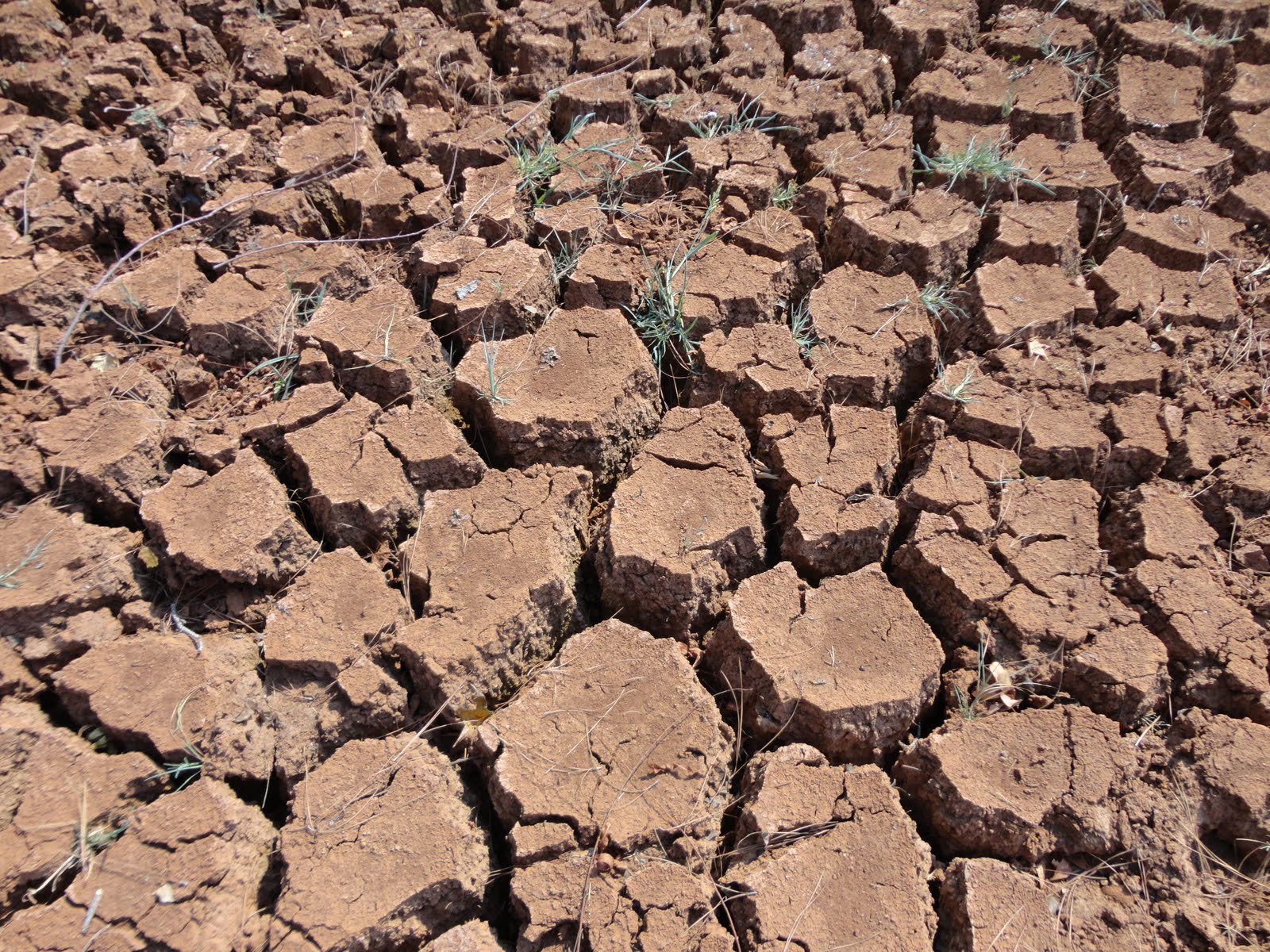
But is is all pleasure, the drought has hit this land particularly hard. Ponds and creeks are almost entirely dried up. Livestock and wildlife are struggling, not just to stay hydrated but to stay fed. Typical pastureland does not weather these arid extremes well... in fact, typical pastureland does not weather any extremes very well.

The vegetation is all but missing from the landscape this year. What is left hardly appeals to the ranging cattle. Many ranchers have sold off their herds early and those who haven't have had to invest a lot in imported feed to keep them going. Either way, conditions like these make ranching a costly venture.

To make an already bleak situation worse, it seems when the high-pressure front that has hovered over most of Texas all summer, and prevented many a storm front from quenching this parched landscape, has at last moved on, it does so not with much needed rain but rather with raging winds.

As I write this, there are evacuations just minutes up the road from where I sit. The smell of smoke hangs in the air and an orange glow lights up the sky to the North West. All that lies between my parents sapped land and a devastating inferno is a pine forest (tinderbox) and a small band of dedicated firefighters.

For us, fortunately, we will be spared this evening. The winds are in our favor and the flames are unlikely to make it this far tonight. Here's to hoping the winds don't shift!

Other's have not been so lucky. Continuing to add insult to injury, this summer will not subside without great losses to land, livestock, homes and wildlife. The thousands of acres ablaze across Bastrop and all throughout Texas today is an unfortunate example.

There are no easy solutions to the situation we are witness to this year. And, with the continual degradation of our landscape through deforestation, ecological neglect and agricultural misunderstandings there is a good chance the situation will get worse before it improves.

Not only is this trend held in place by many causes, it also doesn't seem to be localized to just Texas. All across the world, deserts are expanding while natural forests decline at alarming rates.

Despite the obvious challenges, there is a lot that we can do to turn this trend around... but it's going to take quite a shift from our current practices of land management. What we need is a holistic approach. Building on systems such as Holistic Land Management, Permaculture and reforestation efforts we can begin to rebuild our soils, buffer damage from natural disasters, recharge our springs, aquifers and rivers, and even increase precipitation.

These changes are going to require a great deal of cooperative effort on our part. Only by working together are we going to be able to have any substantial recuperative impact on our environment.